Ways of Seeing
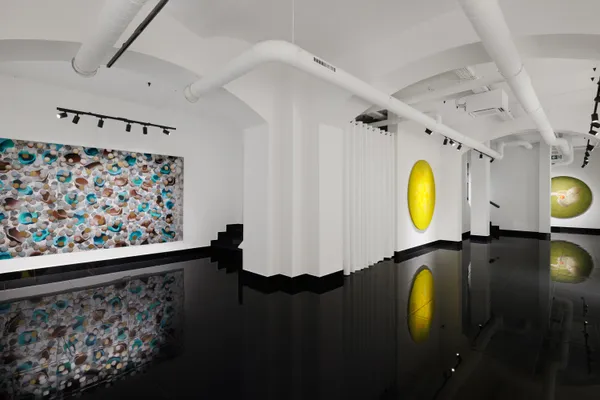
The exhibition Ways of Seeing unfolds its theoretical scope through the interplay of John Berger’s Ways of Seeing and Marcel Proust’s In Search of Lost Time. In this constellation, seeing emerges as a culturally shaped practice and, at the same time, as a process in which time takes shape within perception. The quote “Les vrais paradis sont les paradis qu’on a perdus” articulates an experience in which meaning emerges from temporal distance and perception is structured as the difference between experience and subsequent realization.
In Proust, intensity arises from the shift between the moment and consciousness. An event gains its full meaning in a temporal movement in which the past reconstitutes itself within present experience. Sensory triggers lead to a concentration of time in which different temporal planes overlap and appear as a coherent space of experience. This structure describes a perception in which time organizes itself in the act of seeing and in which meaning emerges from this temporal constellation.
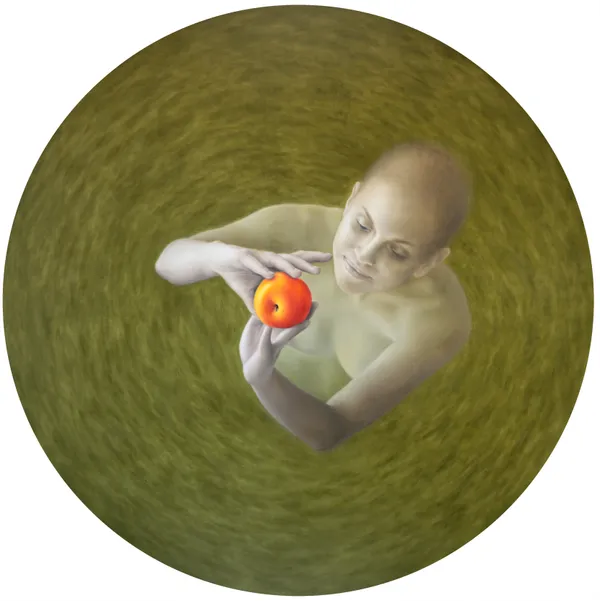
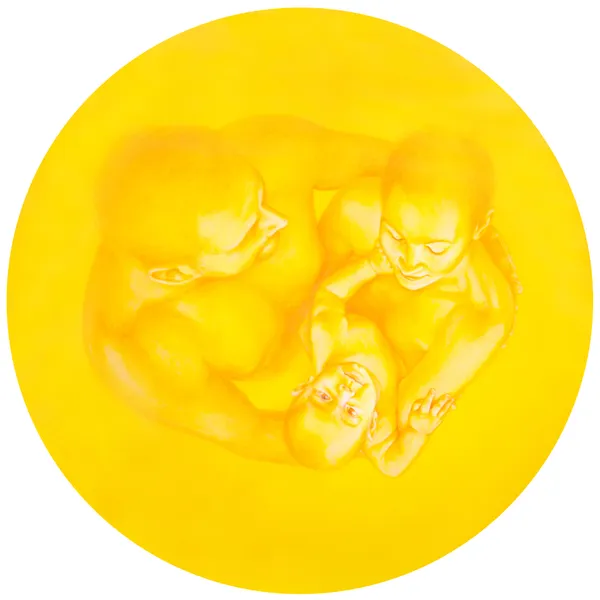
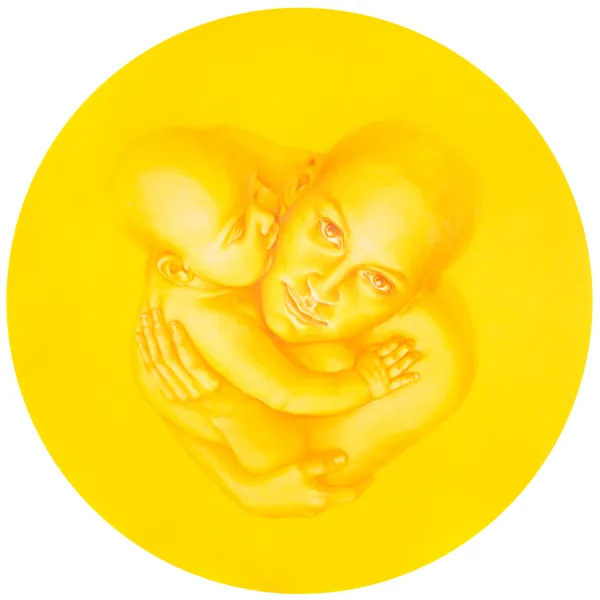
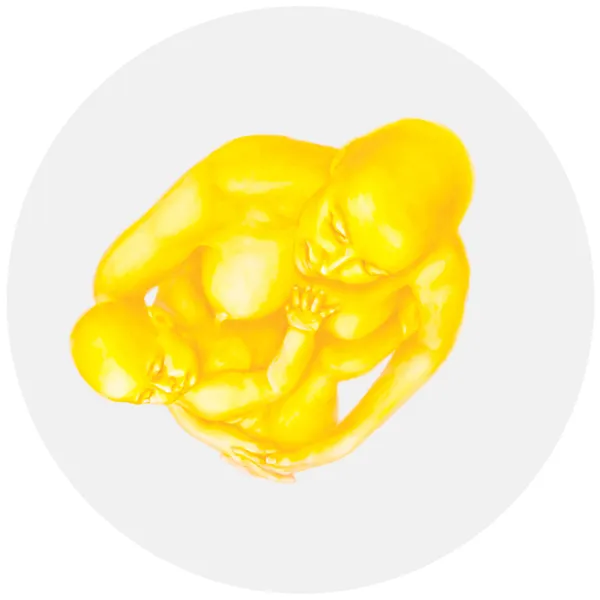
From this perspective, Dorota Sadovská’s painting can be understood as a practice in which iconographic forms carry historical duration and appear as contemporary manifestations in the moment of viewing. The figures’ frontal gazes establish an immediate relationship with the viewer and lead to a situation in which the image constitutes itself as a counterpart. The iconographic motifs, Adam and Eve, the Madonna, the Pietà, saints, stand within an art-historical continuity and emerge as contemporary pictorial forms in the act of seeing.
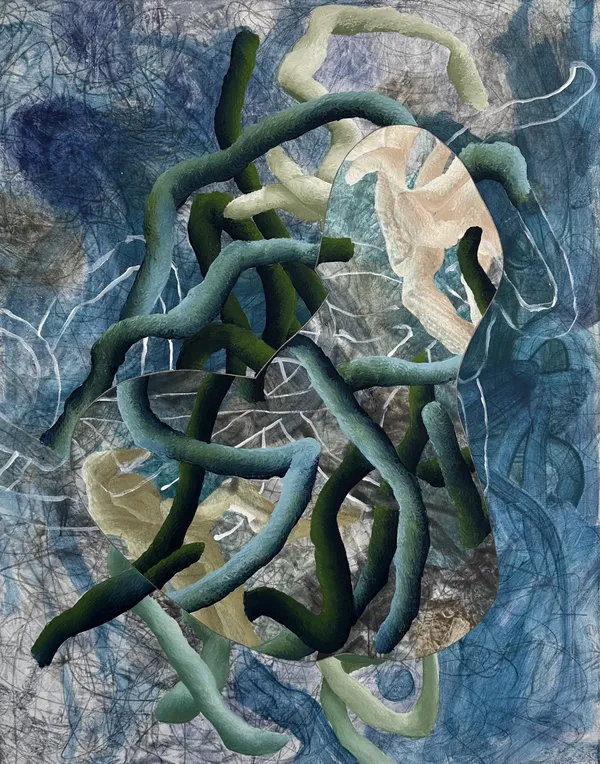
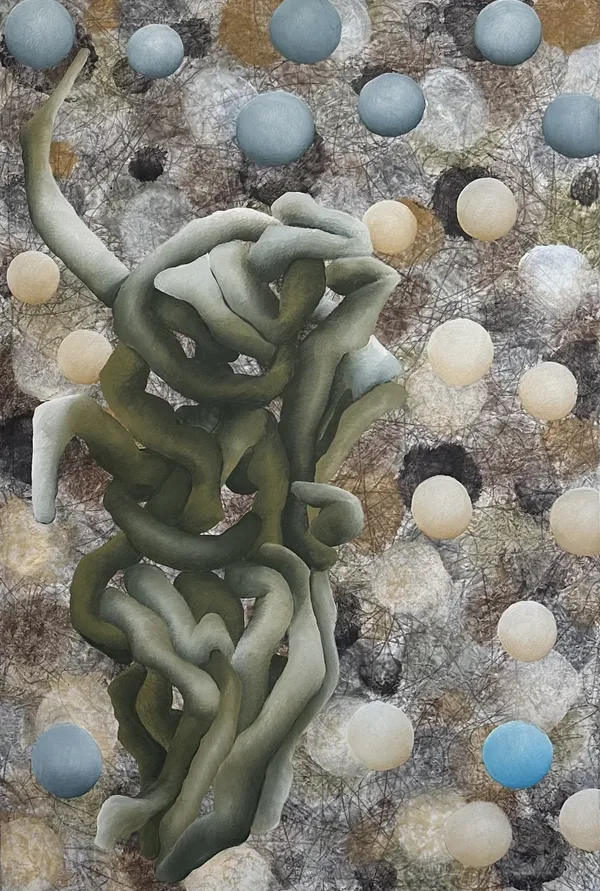
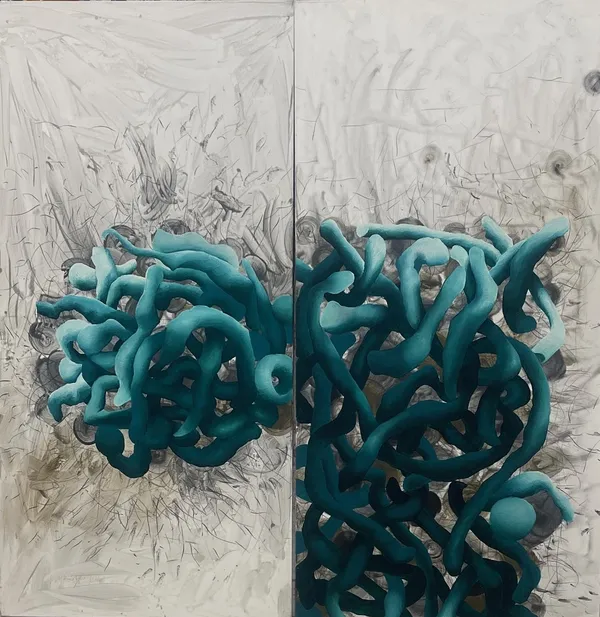
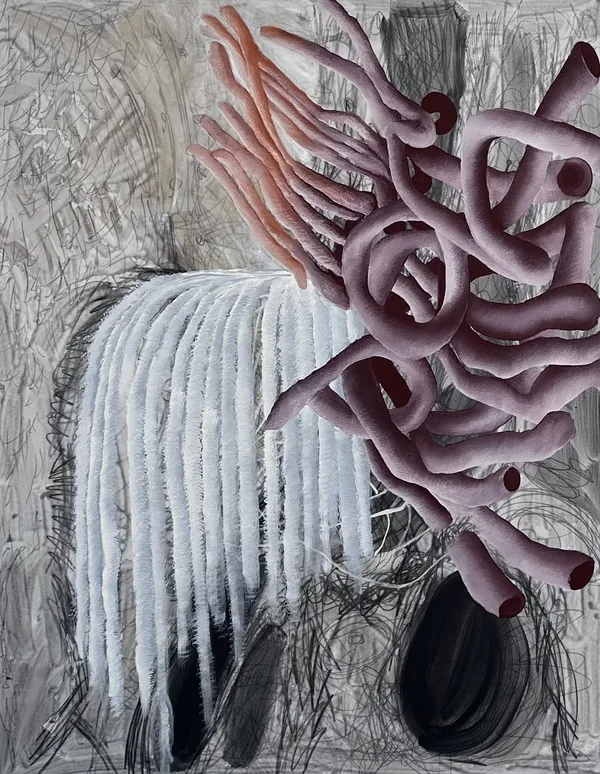
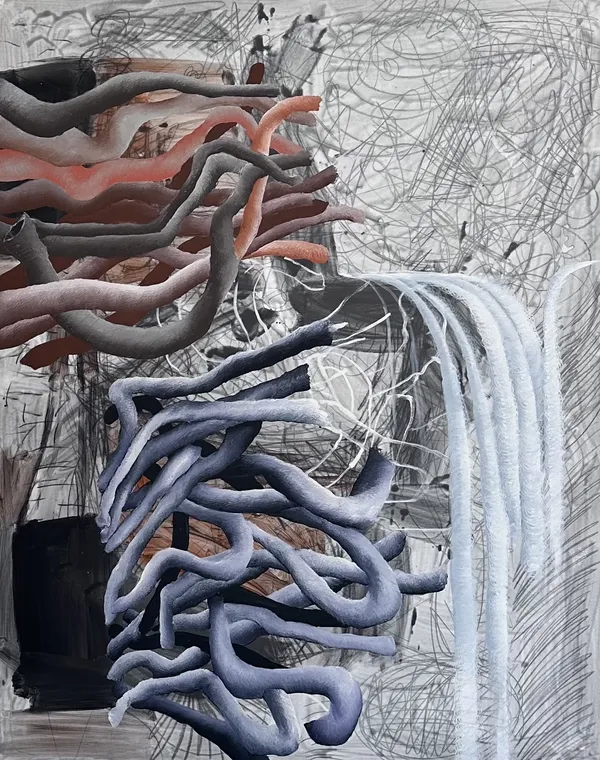
Wolfgang Walkensteiner’s painting develops from an engagement with physically constructed volumes, whose lighting conditions and spatial organization are translated into color. The picture surfaces bear the structure of this perception and guide the gaze through a sequence of visual experiences that unfold in the course of seeing. Form appears as the result of continuous seeing, which manifests itself in the painterly elaboration.
John Berger’s reflections on seeing describe perception as a practice shaped by images and in which cultural order manifests itself. In conjunction with Proust, this perspective expands into a conception of perception in which time reveals itself as an immanent dimension of seeing. Sadovská’s painting activates iconographic image forms and transforms them into a contemporary visibility. Walkensteiner’s works develop a pictorial structure in which perception organizes itself out of light, material, and duration.
The exhibition brings these two positions together in a constellation in which the image defines itself as a site of perception. Seeing appears as a process that takes place within the image and in which time articulates itself as experience. “Les vrais paradis sont les paradis qu’on a perdus.” articulates, within this structure, a perception in which meaning arises from temporal difference and in which the present is formed in the act of seeing.
-
 Dorota Sadovská, With your Desire (Adam), 2024
 -
Dorota Sadovská, With your desire (Eve), 2024
-
Dorota Sadovská, Holy Family, 2025
-
Dorota Sadovská, Madonna with the Child, 2025
-
Dorota Sadovská, Saint Joseph with the Child, 2025
-
Dorota Sadovská, Saint Joseph with the Child, 2026
-
Dorota Sadovská, Madonna Lactans, 2023
-
Dorota Sadovská, Saint Francis of Assisi, 2025
-
Dorota Sadovská, Saint Clare of Assisi, 2025
-
Dorota Sadovská, Pieta, 2026
-
Wolfgang Walkensteiner, Marine Life 1, 2026
-
Wolfgang Walkensteiner, Marine Life 2, 2026
-
Wolfgang Walkensteiner, One Eye´s Meditation, 2026
-
Wolfgang Walkensteiner, Organic Formation 1, 2025
-
Wolfgang Walkensteiner, Organic Formation 2, 2025
-
Wolfgang Walkensteiner, Ezekiel´s Vision, 2025
-
Wolfgang Walkensteiner, Great Electrician 1, 2026
-
Wolfgang Walkensteiner, Great Electrician 2, 2026
-
Wolfgang Walkensteiner, Immunsystem, 2024
-
Wolfgang Walkensteiner, Sisyphos Rolling Stone II, 2020-2021
-
Wolfgang Walkensteiner, Sound Barrier, 2022-2023
-
Wolfgang Walkensteiner, Mars, 2025